A classic for your wall
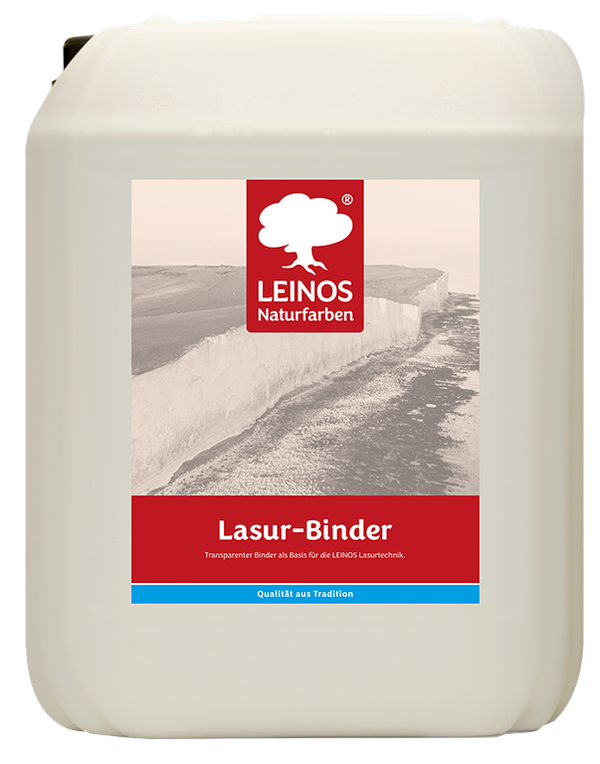
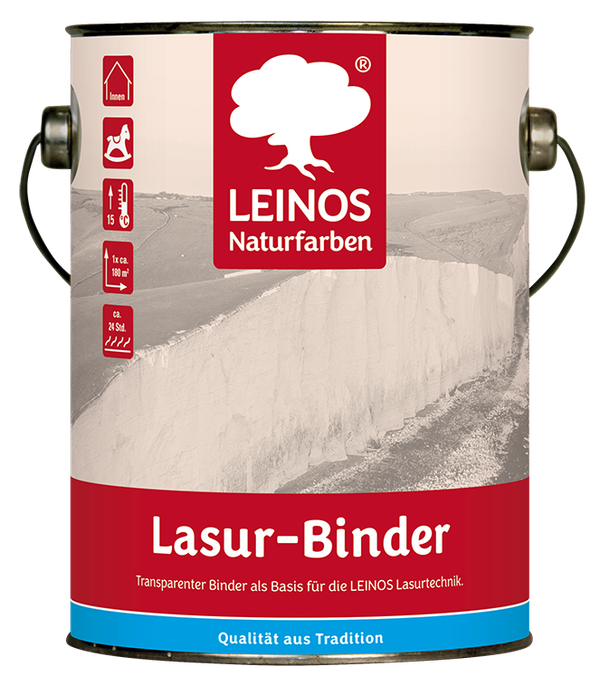
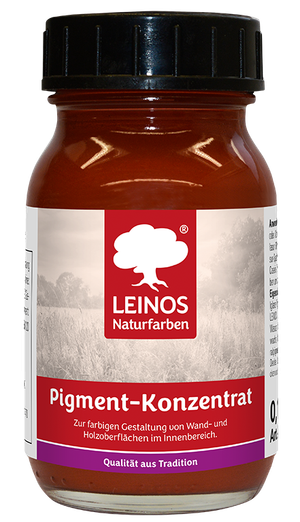
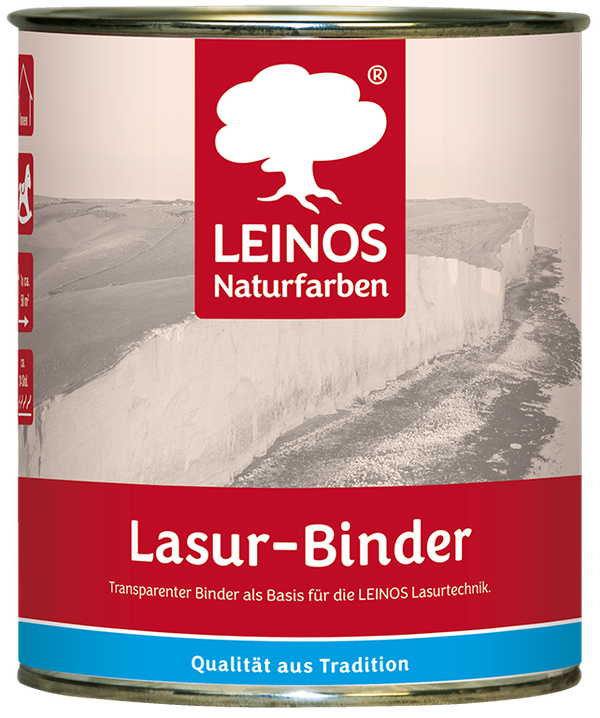
Bring your creative wall design ideas to life with LEINOS Varnish Binder! When used in combination with the 24 LEINOS Pigment Concentrates The range of colour variations and shades is virtually unlimited. Combined with the various application techniques (brush, sponge, etc.) and your own personal ‘style’, the wall surface takes on its own distinctive character. What’s more, it’s so easy to use that you don’t need to be a ‘professional’ to achieve great results!
A classic for your wall
Bring your creative wall design ideas to life with LEINOS Varnish Binder! When used in combination with the 24 LEINOS Pigment Concentrates The range of colour variations and shades is virtually unlimited. Combined with the various application techniques (brush, sponge, etc.) and your own personal ‘style’, the wall surface takes on its own distinctive character. What’s more, it’s so easy to use that you don’t need to be a ‘professional’ to achieve great results!
Substrate and preparation
Stir thoroughly before use! The surface must be dry, sound, clean, free from grease and dust, and free from any substances that might bleed through. The surface should be an even white so that the colours created by the glazing technique are shown to their best advantage (e.g. painted with LEINOS White Emulsion Paint 650 or LEINOS White Emulsion Paint Plus 660, LEINOS Plaster-Effect Paint Mediterranean 680 or LEINOS Plaster-Effect Paint Fine 685).
Processing
Using a brush, sponge or cotton pad. Room and surface temperature above 15 °C.
Mixing the glaze:
LEINOS Varnish Binder is mixed in a ratio of 1 part Varnish Binder to 5–6 parts water. A small tin of LEINOS Varnish Binder (750 ml) will therefore yield approx. 5 litres of varnish binder mixture (1 x 750 ml varnish binder + 6 x 750 ml water = 5.25 l). Five litres will cover approximately 75 m² per coat of glaze. Enter the required quantity LEINOS Pigment Concentrate Add. Depending on the shade and the desired colour intensity, you should use about 1–2 teaspoons Pigment Concentrate per litre of glaze binder/water mixture. For the sponge or wrapping technique, you should not use too much Thinner!
Applying the glaze:
The glaze is usually applied with an oval glazing brush, but it is also possible to dab it on with a natural sponge or apply it by dabbing with a cloth. Glaze quickly so that the glaze does not dry out and form edges. After allowing the previous coat to dry for 2–4 hours, apply the next coat. Apply at least 2, preferably 3, coats of glaze. Always work from light to dark. Do not apply more than 2–3 coats of glaze per day to avoid softening the substrate. Please note: Keep stirring the glaze repeatedly whilst applying it!
Using a brush:
When glazing with a brush, you should work through an area as quickly as possible once you have started, to prevent or minimise the formation of visible edges caused by premature drying. Work wall by wall, from corner to corner, and apply wet-on-wet wherever possible. Apply the glaze thinly using circular movements (‘horizontal figure-of-eights’), ideally without lifting the brush. Once dry (approx. 2–4 hours), apply a second coat: if you do this again with the same glaze, you will achieve very soft colour gradients and a rather subtle texture. For a livelier effect, mix a second, slightly darker shade and apply this over the first, lighter coat. You can repeat this process several times until you achieve your desired result. However, the desired effect is usually achieved with 2–3 coats of glaze.
With a sponge:
Here, too, it is advisable to start by applying a coat of glaze with a brush to give the surface a base colour, which will serve as the foundation for your dabbing technique. Once dry, mix a second shade of glaze of your choice, dip the sponge slightly into this colour and dab it off (e.g. on a clean bucket lid). Then lightly dab the sponge onto the surface you wish to decorate, spreading it across the entire wall. Start by leaving larger gaps, which you can then gradually fill in. You can also fill in the gaps using a different colour. Dab at different angles, as often as you like and using as many different colours as you wish. Usually, a base glaze and two different ‘dab colours’ are used.
With a wrap:
The wrapping technique is similar to the sponge technique: first, apply a coloured base coat with a brush. Once this has dried, you can then roll the cloth – which has been dipped in a second colour and wrung out again – across the wall surface in short strokes. As you do this, keep lifting and repositioning the cloth repeatedly. Here, too, you should leave larger gaps at first, then fill them in bit by bit. Always roll the cloth in different directions to avoid creating a texture that is too uniform. If you like, you can also roll the cloth a second time using a different colour with this technique. If, in the end, the contrasts have become too ‘sharp’, you can apply a final glaze – for example, in the base colour – which will make the surface appear more uniform again.
TIPS & TRICKS:
- You can achieve glazes with a soft gradient by applying the substrate with LEINOS Plaster-Effect Paint – instead of the LEINOS White Emulsion Paint Plus – priming.
- If you want to achieve very rich to dark glazes, you can apply a primer coat – e.g. LEINOS Plaster-Effect Paint – go for a slightly darker shade straight away.
- Work from light to dark, so always apply the lighter shade first.
- Measure out your pigment using a syringe from the chemist’s; this will allow you to reproduce the exact same shade every time.
- When using a brush, you should ideally paint ‘horizontal figure eights’ to spread the glaze and create a cloudy texture. However, you can also work using a ‘cross-hatch’ technique, applying a series of intersecting crosses in an ‘X’ shape, or simply spreading the glaze deliberately in one direction only. Have a go at trying out different techniques!
- If you’ve applied too much glaze, you can dab it off – as soon as possible!
- Do not paint over an area that has already dried, and do not work on the same spot for too long, as you may ‘tear’ the glaze.
- Give the glaze a stir every now and then to prevent the pigments from settling.
- A ‘botched’ glaze usually can’t be salvaged. In such cases, it’s best to repaint everything in white and start again from scratch.
Drying time
Touch-dry after 2–4 hours, fully dry after approx. 24 hours.
Consumption
Approximately 1 litre of the ready-to-use Lasurbinder 646, thinned with water, is required for 15 m². This corresponds to approximately 70 ml per m² of wall surface (15 ml per m² when undiluted), but may vary depending on the absorbency of the substrate.
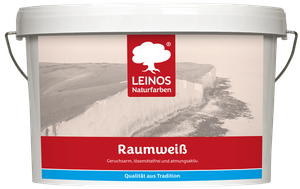
An easy-to-apply, drip-resistant, white natural resin wall paint for all mineral-based interior surfaces.
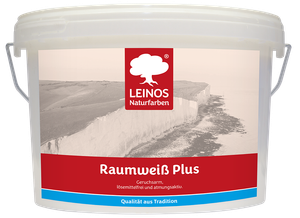
High-coverage, matt wall paint for painting mineral substrates, woodchip wallpaper, etc., in white or coloured finishes.
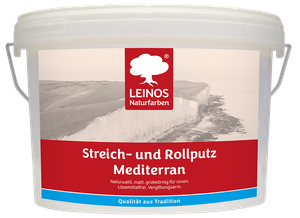
Coarse-grained, diffusion-open render for wall design. Ideal substrate for the LEINOS glaze technique.
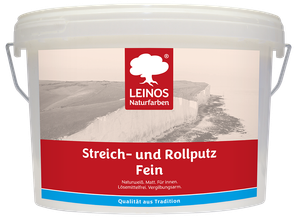
Fine-grained, diffusion-open render for wall design. Ideal substrate for the LEINOS glaze technique.
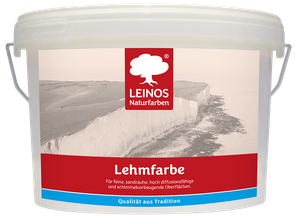
For all absorbent, mineral-based substrates, particularly clay in interior applications.
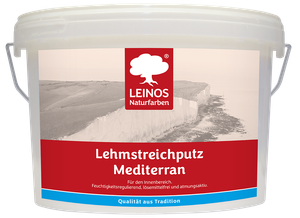
For all absorbent, mineral-based substrates in interior areas, particularly clay. Prevents mould.
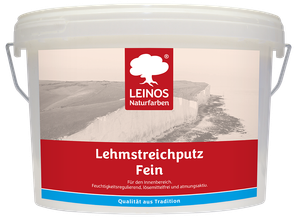
For interior substrates, particularly clay. Regulates moisture and prevents mould.